
The Short Answer
You can drive a car that failed its MOT only if its current MOT certificate is still valid and no dangerous defects were listed. If the old certificate has expired, you can only drive it to a repair or a pre-booked MOT. Driving with a dangerous defect can mean a fine of up to £2,500, a ban and 3 penalty points.
Whether you can drive away after an MOT fail comes down to two things. The first is whether your old certificate is still valid, and the second is whether the tester listed any dangerous defects. Get either one wrong and you're risking a fine, penalty points and a car that isn't safe on the road.
Below we go through each scenario, explain what counts as a dangerous defect and cover the rules on retests, with every rule checked against GOV.UK and the DVSA's MOT inspection manual.
Can I Drive My Car If It Fails Its MOT?
You can drive a car that has failed its MOT only if your current MOT certificate is still valid and no dangerous problems were listed. That's the rule in GOV.UK's guidance on what happens after the test, and if either condition isn't met, the car has to be repaired before it goes back on the road.
If You Failed An Early MOT
Taking the car in before the old certificate runs out is the position you want to be in. If it fails with major defects only, the old certificate still covers you, so you can keep driving it until that expiry date while you arrange the repairs.
A dangerous defect changes things. Even with a valid certificate, you mustn't drive the car until the fault is fixed. GOV.UK says that driving a vehicle that failed for a dangerous problem can bring a fine of up to £2,500, a driving ban and 3 penalty points.
You can have an MOT up to a month minus a day before your current one runs out and keep the same renewal date, according to GOV.UK's main MOT guidance. We book ours early for exactly this reason, as it leaves time to sort any fail without the car being stuck.
If Your MOT Has Already Expired
Once the old certificate has run out, your options narrow. The GOV.UK retest rules say you can only drive the car to have the failed items repaired or to a pre-arranged MOT appointment, and the car must still be roadworthy throughout.
If the fail included a dangerous defect, it can't be driven at all, so it will need to be repaired at the test centre or taken away on a trailer or recovery truck.
What Is Classed As A Dangerous MOT Failure?
A dangerous defect is one the tester judges to be a direct and immediate risk to road safety or to have a serious impact on the environment. These categories arrived with the MOT changes of May 2018, which split defects into dangerous, major and minor. Here are some common dangerous items from the current inspection manual:
- Brake pads or linings worn below 1.5mm, as listed in the brakes section of the MOT inspection manual
- A leaking master cylinder, brake pipe or brake hose on a hydraulic system
- Tyre tread below the 1.6mm legal minimum for cars, under the manual's tyre section
- A tyre with a lump, bulge or tear from a failure of its structure
- Any fluid leaking continuously in a way that's likely to pose a serious risk to road safety
Tyre faults are among the easiest to spot yourself. Our guide to what causes uneven tyre wear shows what to look for, and fresh brake fluid is part of keeping the braking side healthy too.
What Happens If You Drive Without A Valid MOT?
You can be fined up to £1,000 for driving a vehicle without a valid MOT, and GOV.UK displays that warning on the MOT history of any car whose certificate has expired. The only exceptions are driving to a pre-booked test or to have failed items repaired.

Driving without an MOT can also affect your car insurance, so check your policy wording. You can confirm a car's MOT status on the GOV.UK MOT history service, and our guide on checking a car's tax and insurance status covers the other two checks worth doing.
Do I Have To Pay For The Retest?
Not if you leave the car at the test centre for repair and it's retested within 10 working days, as that partial retest is free. If you take it away and bring it back by the end of the next working day, certain items such as lights, wipers and tyres are also retested free.
Take it away and bring it back within 10 working days and the centre can charge a partial retest fee. After that, you're paying for a full test again, and our guide to how much an MOT costs lists the maximum fees.
If My Car Fails Its MOT Can I Take It Somewhere Else?
Yes, you can take the car to a different garage for repairs or a second opinion, as long as it's legal to drive there. Bear in mind that a different test centre will carry out a full MOT and charge the full fee again, whereas returning to the original centre keeps the cheaper partial retest on the table.
Every defect on the failure certificate has a reference to the inspection manual, so you can check exactly what was found. If the fail was for emissions, our guide on getting through the MOT emissions test covers the common fixes.
The Simplest Way To Avoid A Stranded Car
Book the MOT early with a garage you trust to do the repairs. If the car fails, it can stay there for the work and the free partial retest, and you're not left choosing between a fine and a tow truck.
Failed MOT Questions UK Drivers Ask
Can I Drive My Car Home After It Fails Its MOT?
Only if your current MOT certificate is still valid and the fail lists no dangerous defects. If the old certificate has expired, you can only drive to have the faults repaired or to a pre-booked MOT, and only if the car is roadworthy. A dangerous defect means it can't be driven until it's fixed.
What Is The Penalty For Driving With A Dangerous MOT Defect?
GOV.UK says you can be fined up to £2,500, banned from driving and given 3 penalty points for driving a vehicle that failed its MOT because of a dangerous problem. That applies even if your previous MOT certificate is still in date, so get the defect repaired before you use the car.
Can You Drive With A Major MOT Defect?
Yes, if your current MOT certificate is still valid. A major defect fails the test, but it doesn't stop you driving while the old certificate runs, as long as the car is roadworthy. Get it repaired before the old certificate expires, because after that you can only drive to the repair or a pre-booked retest.
How Long Do You Have To Get An MOT Retest?
You have 10 working days for a partial retest. Left at the test centre for repair, the retest is free within that time. If you take the car away, returning by the end of the next working day keeps certain items free, and returning within 10 working days can mean a partial retest fee.
What Is The Difference Between A Major And Dangerous MOT Defect?
Both fail the test. A major defect may affect safety, the environment or other road users and must be repaired, but you can drive while your old certificate is valid. A dangerous defect is a direct and immediate risk, so the car can't be driven at all until the fault is put right.
Does A Failed MOT Cancel My Current MOT?
No. A fail doesn't cancel a certificate that's still in date, which is why an early test is so useful. The fail is recorded on the car's MOT history, though, and you still can't drive with a dangerous defect, even while the old certificate remains valid.
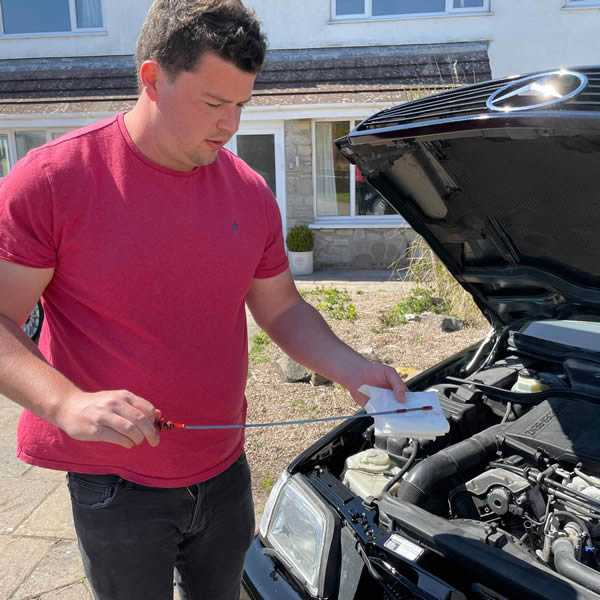
Dan founded YourCar and has owned well over 50 cars since passing his driving test. His current fleet runs from German classics he has restored from barn-find condition to a load lugger, a daily driver, an Audi R8 and a 911 GT3, and every product on YourCar gets used on cars like these first.